National Education Policy (2020) of India is designed to encourage, nurture and develop High Order Thinking among the students and Critical thinking is an inseparable component of High order Thinking. Learning the ways of Critical thinking enable the students to internalise any concept by comprehending and grasping the principles, ideas and logic behind the concept, theory or practice in stead of memorising the contents of any subject or book commonly known as “Rote Learning”.
Both Central Board of Secondary Education (CBSE), Indian Certificate of Secondary Education(ICSE) and West Bengal Board of Secondary Education (WBBSE) have made it compulsory for their Board Examination that a particular percentage of questions will be set in such a way that answers to those questions will necessarily require critical thinking on the part of the students. This percentage of questions will be increasing every year to come so that the objectives of National Education Policy are achieved within the period prescribed in the NEP.
The importance of Critical thinking lies in the fact that employers require their employees to possess Critical Thinking ability, entrepreneurship essentially demands critical thinking ability from the entrepreneurs and above all this mental faculty helps a person enormously in navigating life throughout its period by solving the problems faced. by him.
Our Critical thinking Test is based on following essential dimensions :
1. The analysis of thought.
2. The assessment of thought.
3. The dispositions of thought.
4. The skills and abilities of thought.
5. The obstacles or barriers to critical thought.
Based on above broad foundation, our Critical Thinking Assessment provides measurement of a person’s ability of :
a. Keeping the mind open when approaching an issue or a problem or a subject
b. Critical analysis of the relevant factors
c. Interpretation of different dimensions of the issue involved
d. Avoiding any bias
e. Making logical and intelligent inferences
f. Explorative thinking
g. Comparing various possible solutions
h. Evaluation,
i. Critical thinking and
j. Problem solving
In fine, scores obtained in Critical Thinking Test provides a reliable guide as to one’s present ability to assess situations and assumptions, ask questions after deep dive in the issues involved specially unusual ones and develop various ways of thinking for finding out answers to the questions, problems etc.
Based on the score of Critical thinking Test, our Developmental Psychologist Counsellor will prepare an appropriate roadmap for the individual for improving his or her critical thinking ability and problem solving capability.
B. DMIT (Dermatoglyphic Multiple Intelligence Test)
Well Researched & Proven ways to find out one’s inherent talent which differentiate him or her from others
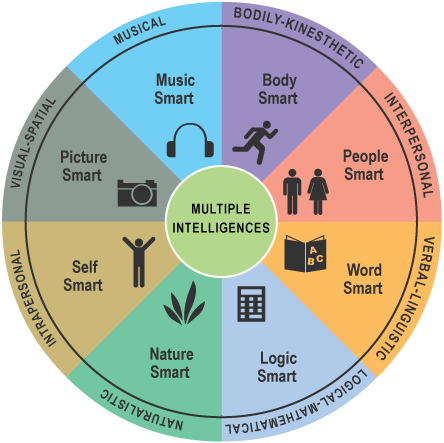
Through DMIT (Dermatoglyphic Multiple Intelligence Test), You Will Know – Which is Your Best Inherent Talent and Which Are Next Best Talents Out of Eight Types of Human Intelligences.
“ The only way to do great work is to love what you do. If you have not found yet, keep looking. Don’t settle.” – Steve Jobs
YOUR MULTIPLE INTELLIGENCE
KNOW YOUR SCORE
Mathematical
Strong in Logical Thinking
Linguistic
Quick in picking up any language
Interpersonal
Strong in people relationship/PR
Kinesthetics
Strong in physical activities, sports
Musical
Inherent Musical Talent
Visual
Strong in painting/photography
Intrapersonal
Strong self development skill
Naturalistic
Strong in Ecology Environment
Invented by Dr. Howard Gardner, PH D. Harvard University, a Psychologist and authority in cognitive education. Used in Developed countries e.g. USA, European countries as well as Asian Countries for determining innate talent of the children and adults by analyzing Fingerprints of a person which are completely different from one person to another.
“Since we all have different cognitive profiles, educators should take those individual differences very seriously.” – Howard Gardner, Developmental psychologist, Research Professor of Cognition and Education at Harvard University
A 77 Pages Report will enable one to know about:
How Much of Each of Above Eight Intelligence You Have
Guidelines for full blossoming of the existing strengths and potentials
Ways to improve upon the weaknesses for a balanced and all round development
Best and most suitable career choices,
Unique learning style and habits which will give the best possible results.
C. Psychometric Test
Psychometric tests are a series of assessments where an individual’s aptitude, verbal, critical thinking, intelligence quotient, and emotional quotient are measured and assessed. These tests enlighten a person about his or her innate talent, inherent attributes, or qualities of a person, both children and adults.
Briefly speaking…
Our Psychometric tests, among other assessment, mainly consists of Cognitive, aptitude & reasoning tests.
Personality tests.
Emotional Intelligence tests.
Situational Judgment tests.
To elaborate, the Psychometric Test measures following primary ability factors
a. Verbal ability– This is the measure of one’s ability to understand written language or comprehension of words and ideas.
b. Numerical ability – Numerical Ability denotes one’s ability of fastness and accuracy of mathematical calculations and how one understand basic mathematical problems with speed and accuracy.
c. Spatial ability- Spatial Ability refers to the perception of spatial patterns accurately and understanding the orientation of figures when their position in a space is altered.
d. Reasoning ability- Reasoning Ability measures the extent of reasoning one can apply with regard to certain specific information to a general principle.
e. Mechanical ability- Mechanical Ability measures one’s ability of understanding basic mechanical principles including , tools, electrical and automotive principles.
f. Closure ability – Closure Ability measures the ability to perceive a shape, letter, picture etc. as a whole even when they are not complete.
g. Psycho-motor ability- Psycho-motor Ability denotes ability to perform precise movements requiring eye-hand co-ordination e.g. quick reaction time, fine-finger movement etc.
h. Clerical ability- This measures one’s ability to perform administrative or clerical job and include proficiency in doing repetitive job.
Psychometric Test, as of date, is widely used Assessment method for finding out various cognitive abilities of a person and many of the Employers and Educational Institutes are using this tool for selection of candidate all over the world.
One must know his or her present abilities so as to improve upon the same for better success and happiness in life.
D. IQ Test
Intelligence is one of the most essential part of human faculties responsible for almost all the actions and operations undertaken by each and every one human being. And hence measuring one’s level of intelligence is necessarily a trigger for taking decisions as to how the same can be further developed or sharpened for success in future life.
The History
The idea of measuring intelligence level of human being was said to be originated by the scientists Sir Francis Galton and Paul Broca. According to them, intelligence can be measured by the size of human skull e.g. the larger the skull, the more intelligent the person.
Subsequently in 1905, it was Alfred Binet and Theodore Simon, the renowned psychologists of their time , formulated an intelligence test which would measure the difference between mentally challenged children and their normal intelligent counterparts. The test was called after their surnames as the Simon-Binet intelligence test.
The specific term ‘IQ’ was coined by the psychologist William Stern in 1912 following the German term Intelligenzquotient Intelligence is commonly known as the ability to learn, perceive, to respond adaptively to new situations, to think rationally and critically, to think abstractly and to comprehend ideas both simple and complex.
IQ is the abbreviation for Intelligence Quotient. The word quotient means the number obtained when we divide one number by another. An intelligence test (IQ Test) is a standardized psychological assessment of a persons cognitive capabilities.
The measured IQ of children is equal to mental age divided by actual (chronological) age. For example, if a child of eight years of age obtains a score expected of a ten-year-old, the child will have a measured IQ of 125, by means of the following calculation:
Mental Age ————————–x 100 = IQ Chronological Age OR 10 ——-x100 = 125 8
IQ Test contains set of questionnaire to judge following intelligences:
The six Index Scales given below assess the following abilities:
Verbal Reasoning: Knowledge of words and one’s ability to apply such knowledge– verbal concept formation, expression and reasoning,
Visual Spatial: understanding spatial relationships and construction ability, ability to observe visual details, understanding the relationship between parts and a whole, and integrating visual and motor skills.
Fluid Reasoning: Ability to see the meaningful relationship among visual objects and applying the same using the concept.
Numerical Ability: The speed and correctness of numerical calculations.
Working Memory: Attention, concentration, holding information in mind and being able to work with information held in mind.
Processing Speed: Speed and accuracy of visual scanning and identifying visual objects, short-term memory, and visual-motor coordination
Each one of above abilities plays a very vital role in day to day functioning of the students, children and adults. These abilities do determine a child’s capability to score high in academic fields, sports, career and almost all other fields of life.
Knowing IQ score helps in determining the deficient areas which is essential for taking any steps for their improvement. On the other hand, one can strengthen their strong areas by taking appropriate measures only when one knows, in details, the strong areas.
Our IQ test are so designed that you will be able to clearly understand your ability on various areas of your intelligence and its level. Our Counsellors, thereafter, will guide you for further sharpening your strong areas and developing your weak areas.
E. ADHD Test
ADHD or Attention-deficit and/or hyperactivity disorder is a persistent pattern of deficit in attention and/or hyperactivity. There are two distinct part of ADHD as can be seen from the term i.e. attention deficit and Hyperactivity. These features are more frequently displayed and more severe than typically observed in a child at a comparable level of development. Children with ADHD have difficulty in paying attention in different environments i.e. at school, at home or at work. Major consequences of ADHD in one’s life is delayed or no success despite having talent, mental health issues, frustration, depression etc.
There have been researches on ADHD during current and last centuries. These researches have revealed that ADHD can continue in the adulthood also having negative impact on the careers, relationships, happiness etc.
Based on the predominant symptoms, ADHD may be one of the three subtypes:
ADHD predominantly inattentive type
ADHD predominantly hyperactive-impulsive type
ADHD combined type
Why ADHD Test?
Our ADHD test helps in diagnosing presence of Attention Deficit or Hyperactivity or both in the mental functionalities of an individual ina very categorical manner i.e. which sub-type it belongs and why ADHD symptoms are displayed by one – the root analysis and its historical reason. It also determines whether the ADHD has any positive effect on the person and if so which are those positive impact on one’s character. It may be pertinent to mention that some of the world renowned personalities have ADHD. The issue here is that if you exactly know your mental attributes and its extent, then you can use the same for a positive and developmental purpose…
ADHD Test Result Analysis Counselling for Improvement Use of tools on daily basis Monitoring & Follow up
Request Free Consultation
Get in touch
Have more questions about CFCEE? We've got you covered.